You may be surprised to find that your chiropractor at
Manchester Chiropractors willalso talk about your diet and lifestyle during your consultation, because spinal misalignments and back pain are not always just mechanical problems. They are deeply connected to systemic inflammation, muscle tension, and how your body heals. Chiropractic care treats the whole person, and adjustments are far more effective when supported by a healthy body chemistry.Your back health is at least in part dependent ongood nutrition.When anyone is asked about how to keep their spine healthy, they think of ways to protect it, how to lift heavy objects correctly, being aware of the furniture we use to give the necessary support with ergonomically designed chairs, or core exercises to strengthen. Whilst all of these factors are important, plus physical movement, we should never disregard the fact that the spine is a living, breathing biological structure that requires certain fuelsfor optimal function.
When your joints are misaligned, it causes localised inflammation
It is simply a fact that the foods we eat directly dictate the strength of the bones, the elasticity of your spinal discs, and the level of inflammation in your back joints. One way that you can positively affect chronic back pain, is by making your kitchen the place to start. Getting down to basics we need to look at the spine itself – a column of 33 vertebrae. To maintain bone density and avoid the micro factures associated with osteoporosis, calcium is an absolute essential. But eating enough calcium-rich foods like dairy or leafy greens is only half the battle.The body only works effectively to absorb this calcium contentwith Vitamin D3 present. At the next stage, Vitamin K2 is needed to work in its own way to direct that calcium towards binding to the bones rather than settling in your arteries. If your diet lacks this trio working in conjunction you stand in danger of your vertebrae becoming brittle, porous, and prone to painful structural shifts. When back pain brings you to us, as well as the physical consultation and any necessary adjustments, your Manchester chiropractor at this
Chiro clinic in Manchester Northern Quarter can explain how this affects your recovery.
Your discs are shock absorbers and require hydration
Ross Chapman our
registered chiropractor in Ancoats will show you and explain how theintervertebral disc sits between each and everyvertebra work as the spine’s shock absorbers, working to absorb the impact of every movement we make. Something that is not commonly understood is that these discs are composed of roughly 80% water at birth.As the aging process progresses, or when we become seriously dehydrated, the discs lose their ideal water content. This causes them to flatten or become thinnerthereby losing their ability to cushion those shocks.Inevitably this causes the vertebrae to close in on each other, increasing the chance of bone-to-bone friction, disc herniation, and pinched nerves. By drinking water in sufficient quantities every day, we are helping the mechanics of the spine to function efficiently.Your hands-on care during chiro treatment is affected in the long term by your ongoing diet. A poor diet and low hydration will slow down recovery times, meaning your chiropractic adjustments may not hold for as long as your chiropractor intended.
The Dietary Triggers of Joint Degeneration
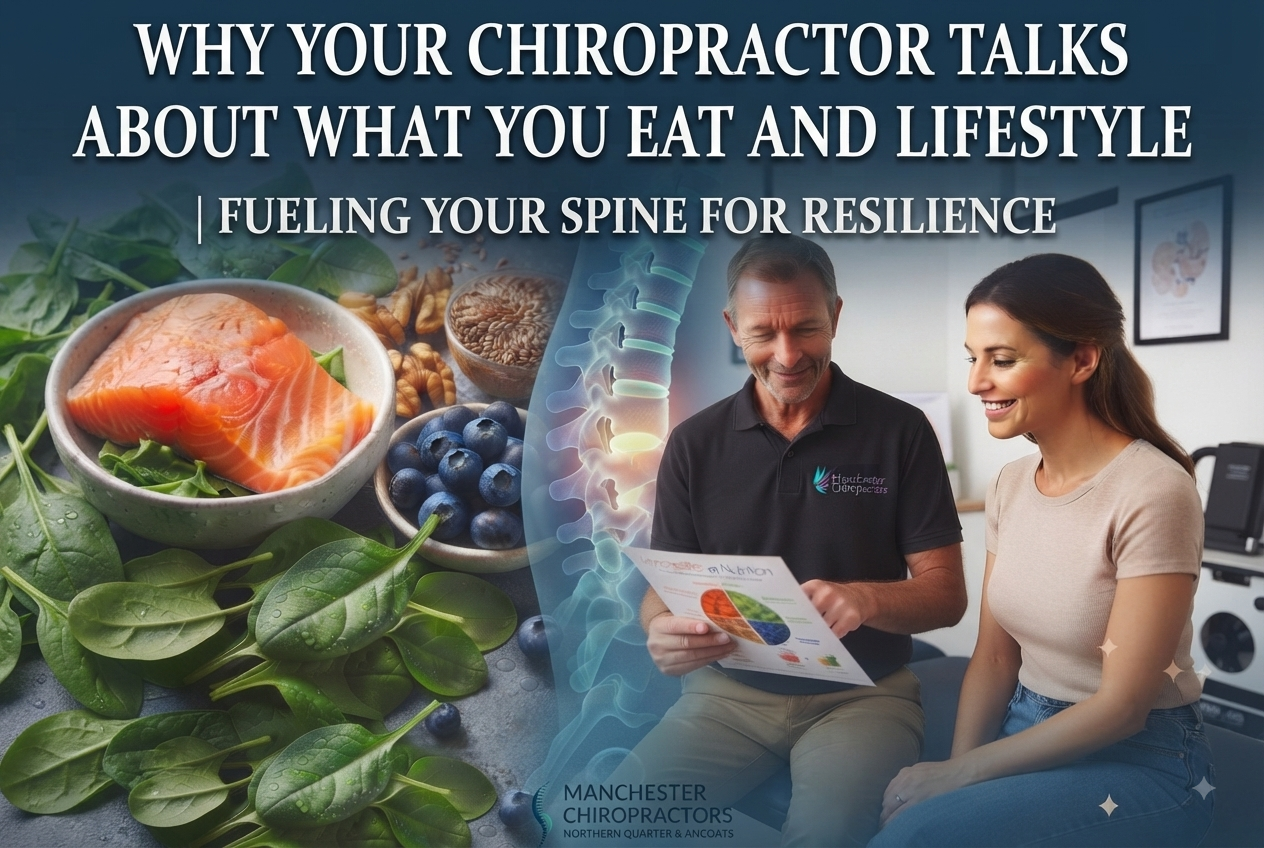
Chronic lower back pain is often caused by systemic inflammation, but few of us stop to think that the foods we are eating are fuelling this inflammation. These days we hear a lot about the dangers if highly processed foods, refined sugars, and trans fats. What is not always explained with these warningsis that they trigger immune response in the bodyas a reaction tothe inflammatory chemicals held in such products. If we eat too much of this type of food these chemicals actively accelerate the degeneration of spinal joints and intensify existing nerve pain. If we change our diets towards fresh foods, they act in the opposite way. The Omega-3 fatty acidsfound in salmon, walnuts, and flaxseeds block inflammatory pathways. Pairing these fatty acids with the antioxidants in berries and dark leafy greens, neutralises the oxidative stress that damages spinal tissues over time.
Feeding the Support System That Holds You Up
Finally, your spine relies heavily on a complex network of muscles, ligaments, and tendons for stability. To repair these tissues from daily wear and tear, your body requires lean proteins for collagen and muscle synthesis. Magnesium is an important contributor, acting as a natural muscle relaxant that prevents the debilitating back spasms triggered by stress or nutrient deficiencies. The spine supports the entire body, but it relies entirely on the nutrients you provide. Trauma or wear and tear may have brought you to this chiropractic clinic in Manchester for pain relief and your experienced
chiropractor in Manchester is ready to help with re-alignments and maintenance plans for recovery, but also with advice. By shifting away from inflammatory, processed foods and embracing a lifestyle rich in hydration, healthy fats, and bone-building minerals, you feed your spine the exact components it needs to stay resilient, flexible, and pain-free for life.